Türkçe

GSM Cutter - Pad - Razor - Digital Scale
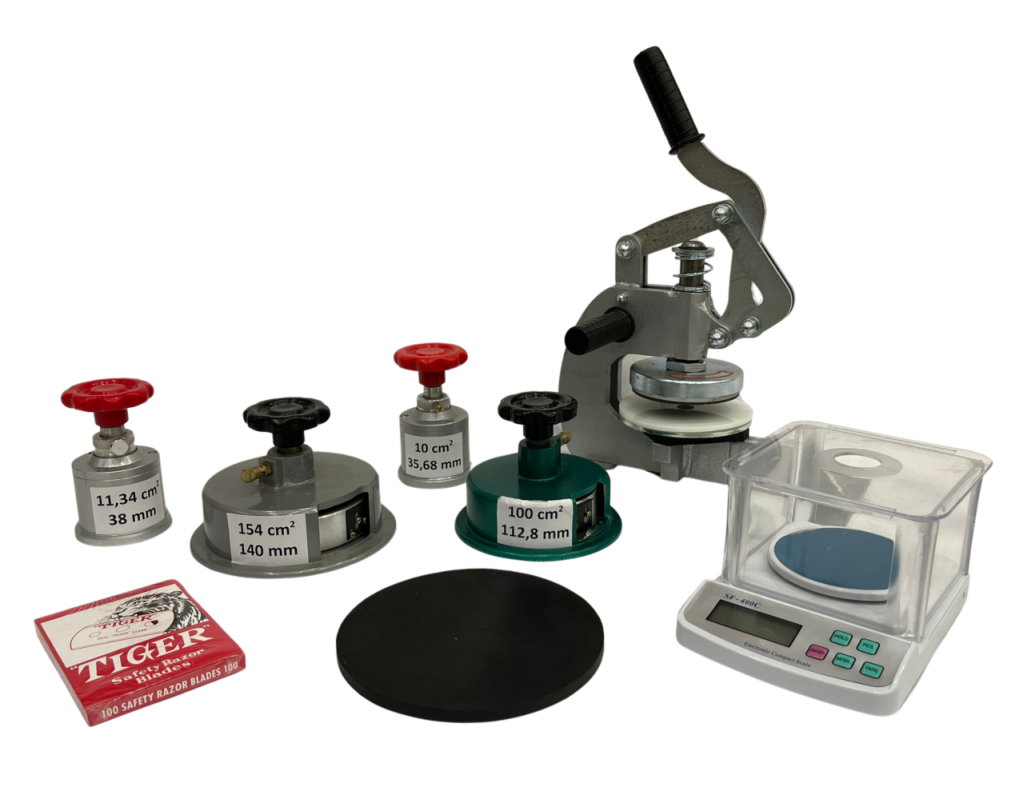
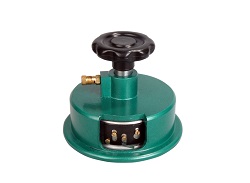
100cm2 GSM Cutter
GSM cutter with a metal body, suitable for cutting 100cm2 samples. Used for fabric, paper and cardboard.
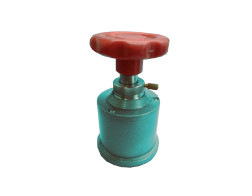
10cm2 GSM Cutter
Small GSM cutter with a metal body, for GSM testing of small fabric, paper and cardboard samples.
Preferred in the knitting industry.
Portable; easy to carry for office and field use.
Suitable when there is not enough area to take a 100cm2 sample.
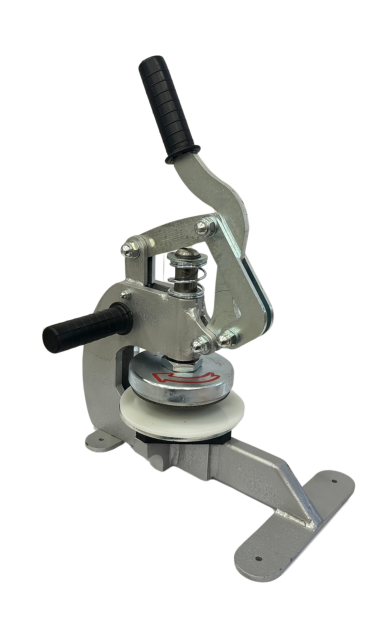
100cm2 Press Style GSM Cutter
Press style, manual type GSM cutter that cuts 100cm2.
- Easy and fast cutting
- Press like usage with spring
- Fixable to desk workbench
- Long lasting cutting blade
- Long lasting silicone cutting pad
Cuts multiple fabric layers at once and handles heavy, high-weight materials such as carpets, towels and bathrobes with ease.
Suitable for cutting many samples in a single session.
Used in textile, paper and cardboard industries.
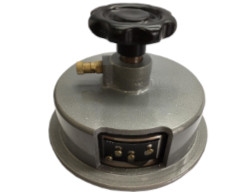
154cm2 GSM Cutter
Suitable to cut fabric samples used in the Martindale test.
Cutting area is 154cm2.
11,34cm2 GSM Cutter
Suitable to cut fabric samples used in the Martindale test.
Cutting area is 11,34cm2.
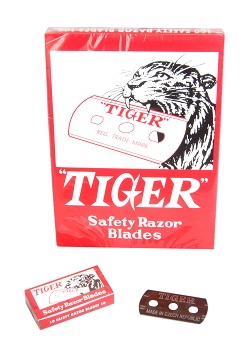
GSM Cutter Razor
Razors for GSM cutters.
GSM Cutter Pad
High quality plastic pads for GSM cutters.
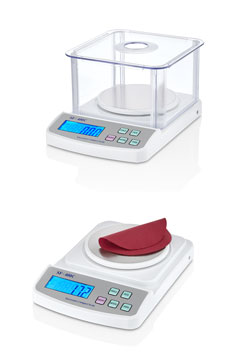
Digital Scale
Digital scale suitable for fabric testing, with 600gr capacity and 0,01gr accuracy.
Available with or without a windshield.
How Is the Grammage (GSM) of Fabric, Paper and Cardboard Measured and Calculated?
Why Is Grammage Measured?
Grammage is the weight of a material per square metre (g/m², also known as GSM). It is a key indicator of quality and cost in fabric, paper and cardboard.
Designers and engineers choose the yarn type and fabric structure (weave density or knit construction) to achieve the target grammage. The producer checks whether the output meets this target, and the buyer confirms that the delivered goods are at the required grammage.
When the grammage of a fabric drops, its handle (feel) and durability change; this is why goods are measured regularly on arrival, during production and before shipment.
Who Measures Grammage?
Measuring grammage is a daily quality control task in the textile and paper industries.
The producer measures it both at the design and production stages: to set the target grammage in design, and to track whether the output meets it during production. Knitting, weaving and garment facilities do this on their own lines. On the buyer side, quality control staff, retailers and exporters inspect the incoming fabric. Independent inspection firms and accredited textile laboratories also carry out grammage testing in their physical testing departments.
Paper and cardboard manufacturers likewise check grammage at regular intervals along the production line.
Preconditioning
Fabric, paper and cardboard take up and release moisture from the air, so their weight changes with the humidity of their surroundings. Although this step is often skipped in practice, for a more accurate measurement it is recommended that the sample be brought to equilibrium in a controlled temperature and humidity environment before measuring.
If the producer, seller and buyer have agreed on a standard, for example conditioning standards such as ISO 139 for textiles and ISO 187 for paper and cardboard, the sample is conditioned according to those requirements. This increases measurement precision and gives a more accurate result.
How Is a Sample Taken?
A sample is taken with the GSM cutter by following these steps:
- First, the safety locking pin is checked to be in the closed position. While the pin is closed, the blades stay inside the cutter; this both protects the blades and prevents the blades from catching and cutting something.
- The pad of the GSM cutter is placed on a flat surface or table.
- The area to be cut is checked for any hard objects such as staples or pins; such objects damage the blades.
- The product to be cut is placed centred on the pad.
- The GSM cutter is placed over the product so that it is centred on the pad.
- The spring-loaded safety locking pin is pulled outward and turned to the right or left; the pin seats into its slot and locks. The blades then come out and are ready to cut.
- Pressing gently, the cutter is turned at least 90° (a quarter turn).
- The safety locking pin is pulled out again and turned right or left to release it from its slot, then let go; the blades retract inside and lock.
- The GSM cutter is lifted and the sample is checked to see whether it has been cut all the way through.
Grammage may not be exactly the same at every point of the product. For a more accurate result, several samples are taken from different areas and averaged. Samples are taken from the inner part of the product, not the edge, because the edge area does not represent the bulk.
Weighing
The cut sample is weighed on a precise digital scale. A 100cm² sample is one hundredth of a square metre, so the weight measured is small.
For example, a 100cm² sample taken from an 80 g/m² paper weighs 0.8 grams, while a sample from a 400 g/m² fabric weighs 4 grams. At such small weights, even an air current can affect the result.
For this reason, a scale with at least 0.01 gram accuracy is used; scales with a windshield are preferred to prevent the effect of drafts. If several samples are cut, they are weighed together and averaged to minimise weighing errors.
Calculation
With a 100cm² sample the calculation is very simple: the gram value read on the scale is multiplied by 100 to find the grammage per square metre.
For example, if the sample weighs 4 grams, the grammage is 4 × 100 = 400 g/m². In other words, one square metre of that fabric weighs 400 grams.
This works because a 100cm² sample is exactly 1/100 of 1 m²; multiplying the weight of the small piece by 100 gives the weight of one square metre.
If several samples are weighed, the average weight per sample is found first, then multiplied by 100.
You can find the GSM cutters and digital scale used for these measurements above on this page.
How can we help you?
We ship internationally; small orders are welcome.